 by Nayeghar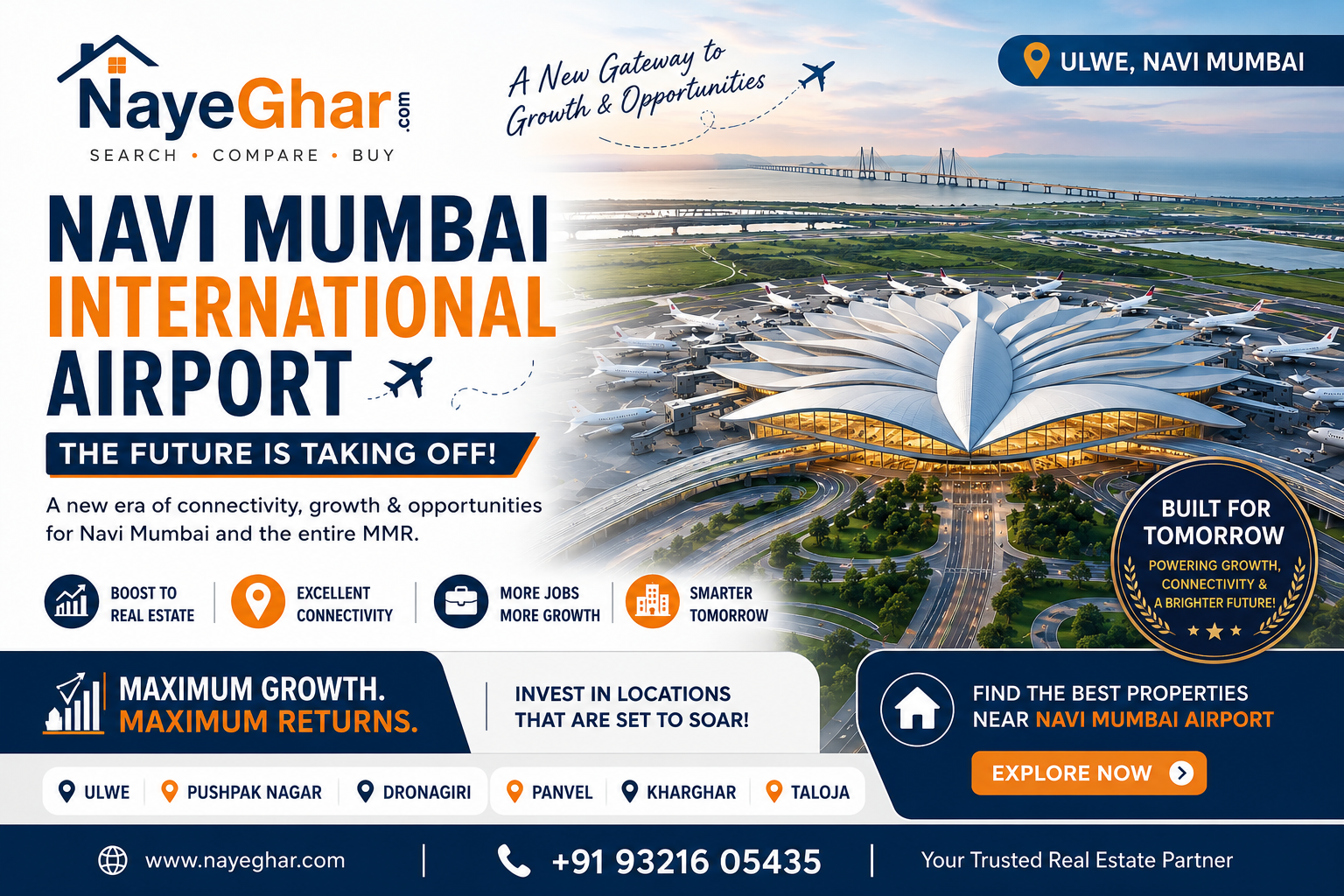
Introduction
The Navi Mumbai International Airport (NMIA) is one of India’s most ambitious infrastructure projects and is expected to redefine the future of Navi Mumbai, Mumbai, and the entire Mumbai Metropolitan Region (MMR). Developed to reduce congestion at Mumbai’s Chhatrapati Shivaji Maharaj International Airport, NMIA is not just an aviation project; it is a catalyst for economic growth, employment generation, urban development, and real estate appreciation.
As Navi Mumbai continues to emerge as a modern smart city, the airport is becoming the centerpiece of a massive transformation that includes metro rail connectivity, new business districts, logistics hubs, residential developments, and commercial investments.
In this comprehensive guide, we explore everything you need to know about Navi Mumbai International Airport, its features, connectivity, economic impact, and how it is creating new opportunities for homebuyers and investors.
Overview of Navi Mumbai International Airport
Navi Mumbai International Airport is located in Ulwe, Navi Mumbai, Maharashtra. The airport has been designed as a world-class aviation hub with state-of-the-art infrastructure and passenger facilities.
Key Facts
- Location: Ulwe, Navi Mumbai
- Airport Code: NMI
- Developer: Navi Mumbai International Airport Limited (NMIAL)
- Operators: Adani Airport Holdings Limited & CIDCO
- Planned Passenger Capacity: Up to 90 Million Passengers Annually
- Cargo Handling Capacity: More than 2.5 Million Tonnes Annually
- Runways: Dual Parallel Runways
- Project Cost: Estimated over ₹16,000 Crore
The airport is expected to significantly reduce pressure on Mumbai Airport while improving regional and international connectivity.
Why Was Navi Mumbai Airport Needed?
Mumbai’s existing airport has been operating close to its maximum capacity for years. As one of India’s busiest airports, it handles millions of passengers annually and faces operational constraints due to limited expansion possibilities.
The new airport aims to:
- Reduce congestion at Mumbai Airport
- Improve domestic and international connectivity
- Support increasing air travel demand
- Create employment opportunities
- Boost economic growth in Navi Mumbai
- Strengthen logistics and cargo operations
- Attract global businesses and investors
Architectural Excellence and Modern Design
One of the most remarkable aspects of NMIA is its iconic architecture inspired by the lotus flower.
The airport has been designed with:
Sustainable Infrastructure
- Energy-efficient systems
- Green building technologies
- Rainwater harvesting
- Solar energy integration
- Smart waste management
Passenger-Centric Features
- Automated check-in systems
- Smart baggage handling
- Contactless travel technologies
- Spacious terminals
- Luxury lounges
- Premium retail zones
The airport aims to provide a seamless travel experience while maintaining environmental sustainability.
Connectivity Advantages
Connectivity is one of the biggest strengths of Navi Mumbai International Airport.
Mumbai Trans Harbour Link (Atal Setu)
The Atal Setu bridge has drastically reduced travel time between South Mumbai and Navi Mumbai.
Benefits include:
- Faster airport access
- Reduced traffic congestion
- Improved regional mobility
- Better business connectivity
Metro Connectivity
The airport will be connected through multiple metro corridors.
Upcoming Metro Links
- Navi Mumbai Metro
- Metro Line 8
- Airport Express Connectivity
These projects will allow passengers to travel efficiently across Mumbai, Navi Mumbai, Thane, and surrounding regions.
Rail Connectivity
The airport is strategically connected to:
- Seawoods Railway Station
- Belapur Railway Station
- Panvel Railway Station
- Targhar Railway Station
This ensures easy accessibility for commuters throughout the Mumbai Metropolitan Region.
Economic Impact of Navi Mumbai Airport
The airport is expected to generate substantial economic benefits.
Employment Generation
Experts estimate that the airport ecosystem will create:
Direct Jobs
- Airport Operations
- Security Services
- Airlines
- Ground Handling
- Cargo Management
Indirect Jobs
- Hospitality
- Tourism
- Transportation
- Retail
- Real Estate
- Logistics
Thousands of new employment opportunities are expected over the coming years.
Impact on Real Estate Market
The Navi Mumbai Airport has already become one of the strongest drivers of property appreciation in the region.
Areas Benefiting the Most
Ulwe
Ulwe is considered the biggest beneficiary due to its proximity to the airport.
Key Advantages:
- Airport access
- Metro connectivity
- Atal Setu connectivity
- Growing social infrastructure
Pushpak Nagar
Pushpak Nagar is emerging as a planned residential destination with strong investment potential.
Benefits include:
- Airport influence zone
- Affordable pricing
- Future commercial development
Dronagiri
Dronagiri is witnessing increased investor interest due to upcoming infrastructure projects.
Panvel
Panvel continues to attract both end-users and investors because of:
- Excellent connectivity
- Railway junction
- Metro expansion
- Commercial growth
Kharghar
Kharghar remains one of Navi Mumbai’s most premium residential destinations.
Advantages:
- Educational institutions
- Business hubs
- Golf course
- Metro connectivity
- Airport accessibility
Taloja
Taloja offers affordable housing opportunities and is expected to benefit from future infrastructure development linked to the airport ecosystem.
Commercial Growth Opportunities
The airport is expected to attract:
- IT Parks
- Business Centers
- Warehousing Facilities
- Logistics Parks
- Data Centers
- Corporate Headquarters
As businesses move closer to transportation hubs, commercial demand in Navi Mumbai is likely to rise significantly.
Tourism Growth
A modern international airport can transform tourism.
Expected benefits include:
- Increased international arrivals
- Better domestic tourism
- Growth in hotel industry
- Expansion of entertainment zones
- Development of convention centers
The airport will strengthen Mumbai’s position as a global business and tourism destination.
Infrastructure Projects Supporting the Airport
Several mega projects are enhancing the airport’s impact.
Atal Setu
India’s longest sea bridge connecting Mumbai and Navi Mumbai.
Navi Mumbai Metro
Improving urban mobility throughout Navi Mumbai.
Coastal Road Project
Providing faster connectivity across Mumbai.
Dedicated Freight Corridors
Supporting logistics and industrial growth.
Multi-Modal Transport Integration
Creating seamless travel between rail, road, metro, and air transport.
Why Homebuyers Should Consider Investing Near NMIA
Property buyers are increasingly looking at airport-influenced zones due to:
- Better connectivity
- Future appreciation potential
- Infrastructure development
- Employment opportunities
- Improved lifestyle amenities
Historically, airports have significantly contributed to real estate growth in cities around the world.
Best Property Types for Investment
Residential Apartments
Ideal for long-term appreciation and rental income.
Commercial Offices
Expected to benefit from growing business activity.
Retail Shops
High demand due to increasing footfall.
Warehouses
Logistics and e-commerce growth create strong demand.
Plots
Suitable for investors seeking long-term capital appreciation.
Future Outlook
The future of Navi Mumbai International Airport looks exceptionally promising.
Over the next decade, NMIA is expected to:
- Become one of India’s busiest airports
- Drive large-scale urban development
- Create thousands of jobs
- Increase property values across Navi Mumbai
- Attract multinational companies
- Enhance global connectivity
The airport will play a pivotal role in transforming Navi Mumbai into one of India’s most advanced urban centers.
Conclusion
Navi Mumbai International Airport is much more than an aviation project. It represents the future of infrastructure-led growth in Maharashtra. From improved connectivity and employment generation to real estate appreciation and commercial expansion, the airport is set to become a game-changing development for the entire Mumbai Metropolitan Region.
For homebuyers, investors, developers, and businesses, the airport presents an opportunity to participate in one of India’s most significant urban growth stories.
Whether you are looking to buy a home, invest in commercial property, or explore emerging real estate destinations, the Navi Mumbai Airport corridor is undoubtedly one of the most promising regions for long-term growth.
Explore Properties Near Navi Mumbai International Airport
Visit NayeGhar.com to discover premium residential and commercial projects in Ulwe, Kharghar, Panvel, Taloja, Pushpak Nagar, Dronagiri, and other rapidly growing locations across Navi Mumbai.