 by Nayeghar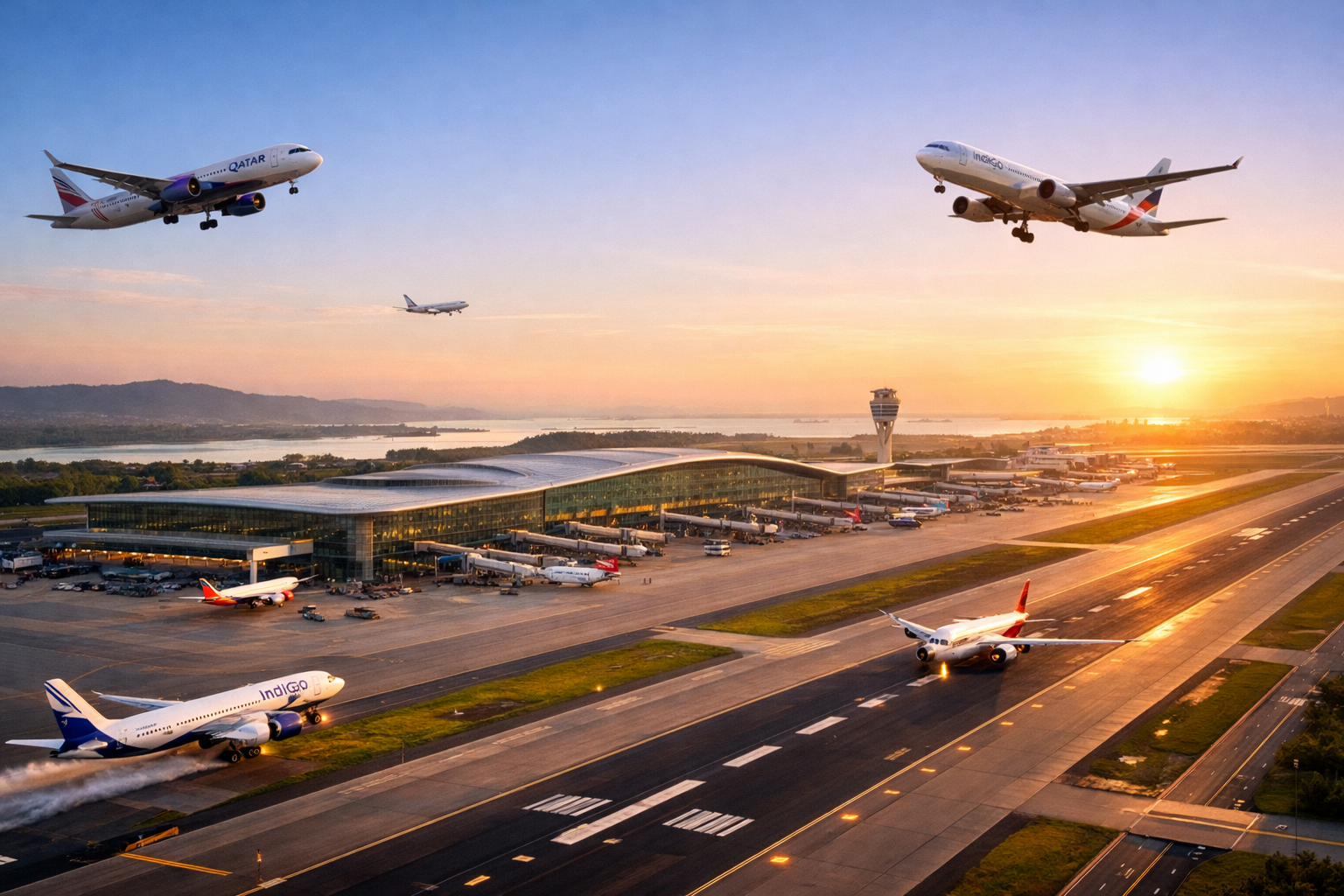
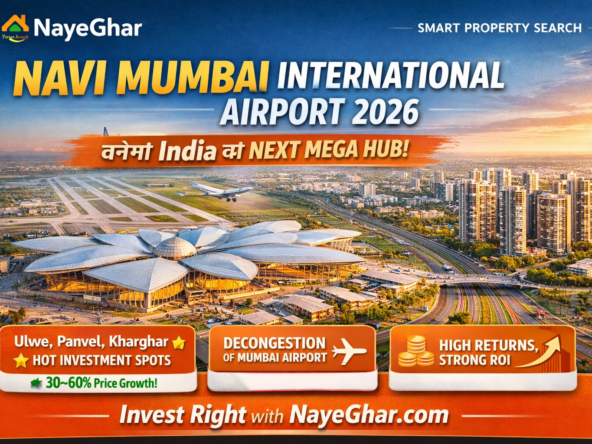
The long-awaited Navi Mumbai International Airport (NMIA) is set to redefine air travel in the Mumbai Metropolitan Region (MMR). Built to decongest the overloaded Mumbai airport and to support India’s fast-growing aviation demand, NMIA will soon become a major domestic and international aviation hub.
This detailed guide covers expected flights, airlines, routes, opening phases, connectivity, passenger facilities, and the impact on real estate and business—everything travelers and investors need to know.
1. Why Navi Mumbai Needed a New Airport
Mumbai’s existing airport, Chhatrapati Shivaji Maharaj International Airport, operates beyond its designed capacity. With limited scope for expansion, delays and congestion became common.
NMIA was planned to:
- Handle rising passenger traffic
- Support wide-body international flights
- Boost economic growth in Navi Mumbai & Raigad
- Reduce load on Mumbai airport
Once fully operational, NMIA will transform air travel across Western India.
2. Navi Mumbai Airport Flights – What to Expect
✈️ Domestic Flights (Phase 1)
In the initial phase, NMIA will focus heavily on domestic operations, including:
Major Routes Expected
- Delhi
- Bengaluru
- Hyderabad
- Chennai
- Kolkata
- Ahmedabad
- Goa
- Jaipur
- Kochi
- Trivandrum
- Pune
Likely Airlines
- IndiGo
- Air India
- Vistara
- Akasa Air
- Air India Express
These flights will help passengers from Navi Mumbai, Panvel, Kharghar, Ulwe, and Raigad avoid traveling to Mumbai city for air travel.
🌍 International Flights (Phase 2 & Beyond)
As infrastructure scales up, NMIA will introduce medium-haul and long-haul international flights.
Expected International Destinations
- Dubai
- Abu Dhabi
- Doha
- Muscat
- Singapore
- Bangkok
- Kuala Lumpur
- London
- Frankfurt
- New York (future phase)
International Airlines Likely to Operate
- Emirates
- Qatar Airways
- Etihad Airways
- Singapore Airlines
- Lufthansa
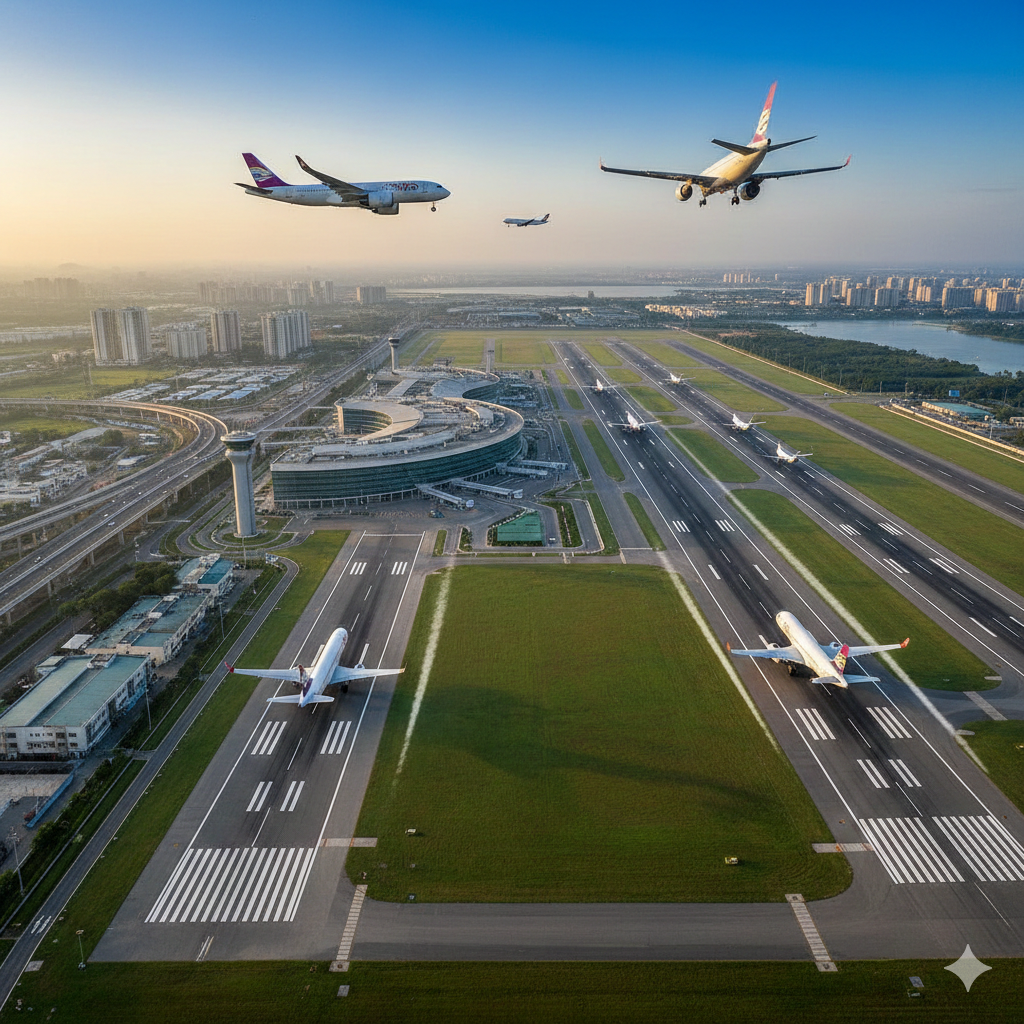
NMIA’s long parallel runways will allow seamless handling of wide-body aircraft like A350s and Boeing 777s.
3. Airport Capacity & Phases
| Phase | Passenger Capacity | Key Highlights |
|---|---|---|
| Phase 1 | 20 million/year | Domestic focus |
| Phase 2 | 30–40 million/year | International expansion |
| Final Phase | 60+ million/year | Global aviation hub |
The airport is designed with future scalability, ensuring smooth growth for decades.
4. Runways & Technical Excellence
NMIA features:
- Two parallel runways (simultaneous operations)
- Advanced CAT-II/III ILS for low-visibility landings
- Night operations without restrictions
- State-of-the-art ATC systems
This makes NMIA one of the most technically advanced airports in India.
5. Passenger Experience & Terminal Facilities
Travelers flying from Navi Mumbai Airport can expect:
- Smart self check-in & biometric boarding
- Spacious international-style terminals
- Luxury lounges & duty-free shopping
- High-speed baggage handling
- Multi-modal transport integration
- World-class food courts & retail
The airport aims to offer a premium, stress-free travel experience.
6. Connectivity to Navi Mumbai Airport
NMIA will be one of India’s best-connected airports:
- Mumbai Trans Harbour Link (MTHL)
- Dedicated airport metro line
- Suburban rail & bus connectivity
- Direct highway access from Navi Mumbai & Pune
Travel time from South Mumbai will reduce drastically once MTHL is fully operational.
7. Impact on Real Estate & Business
The launch of Navi Mumbai Airport flights is already:
- Increasing property demand in Ulwe, Panvel, Kharghar, Taloja
- Attracting hotels, logistics parks & IT hubs
- Boosting commercial & warehousing investments
- Creating thousands of direct & indirect jobs
For investors, NMIA is a once-in-a-generation growth catalyst.
8. How NMIA Complements Mumbai Airport
Rather than replacing Mumbai airport, NMIA will work in coordination:
- NMIA: Long-haul, international & future growth
- Mumbai Airport: Core domestic & premium routes
This dual-airport system mirrors global cities like London & New York.
9. When Will Flights Start?
Commercial operations are expected to begin in phased manner, starting with domestic flights, followed by international routes after regulatory approvals and infrastructure readiness.
(Exact schedules will be announced by airlines closer to launch.)
10. Future Vision of Navi Mumbai Airport
NMIA is envisioned as:
- A global transit hub
- India’s most sustainable airport
- A driver of Maharashtra’s economic expansion
- A benchmark for future airport development
Frequently Asked Questions (FAQs)
1. Will international flights operate from Navi Mumbai Airport?
Yes, international flights will start in later phases.
2. Which airlines will fly from NMIA?
Major Indian and international airlines are expected.
3. Will NMIA reduce congestion at Mumbai airport?
Absolutely. That’s one of its primary goals.
4. Is Navi Mumbai Airport suitable for long-haul flights?
Yes, it has long runways designed for wide-body aircraft.
5. Which areas benefit most from NMIA?
Ulwe, Panvel, Kharghar, Taloja, and Raigad.
6. Will budget airlines operate from NMIA?
Yes, especially during initial domestic phases.
7. How far is NMIA from Mumbai city?
Around 35 km, with fast road & sea connectivity.
8. Will cargo flights operate from NMIA?
Yes, NMIA includes dedicated cargo infrastructure.
9. Is NMIA India’s largest airport?
It will be among the largest in capacity once fully developed.
10. Will ticket prices be cheaper from NMIA?
Increased competition may lead to competitive fares.
Conclusion
The launch of Navi Mumbai Airport flights marks a new era for Indian aviation. With world-class infrastructure, global connectivity, and massive economic impact, NMIA is not just an airport—it’s the future gateway of Western India.
Whether you are a traveler, business owner, or real estate investor, Navi Mumbai International Airport is a development you simply cannot ignore.