 by Nayeghar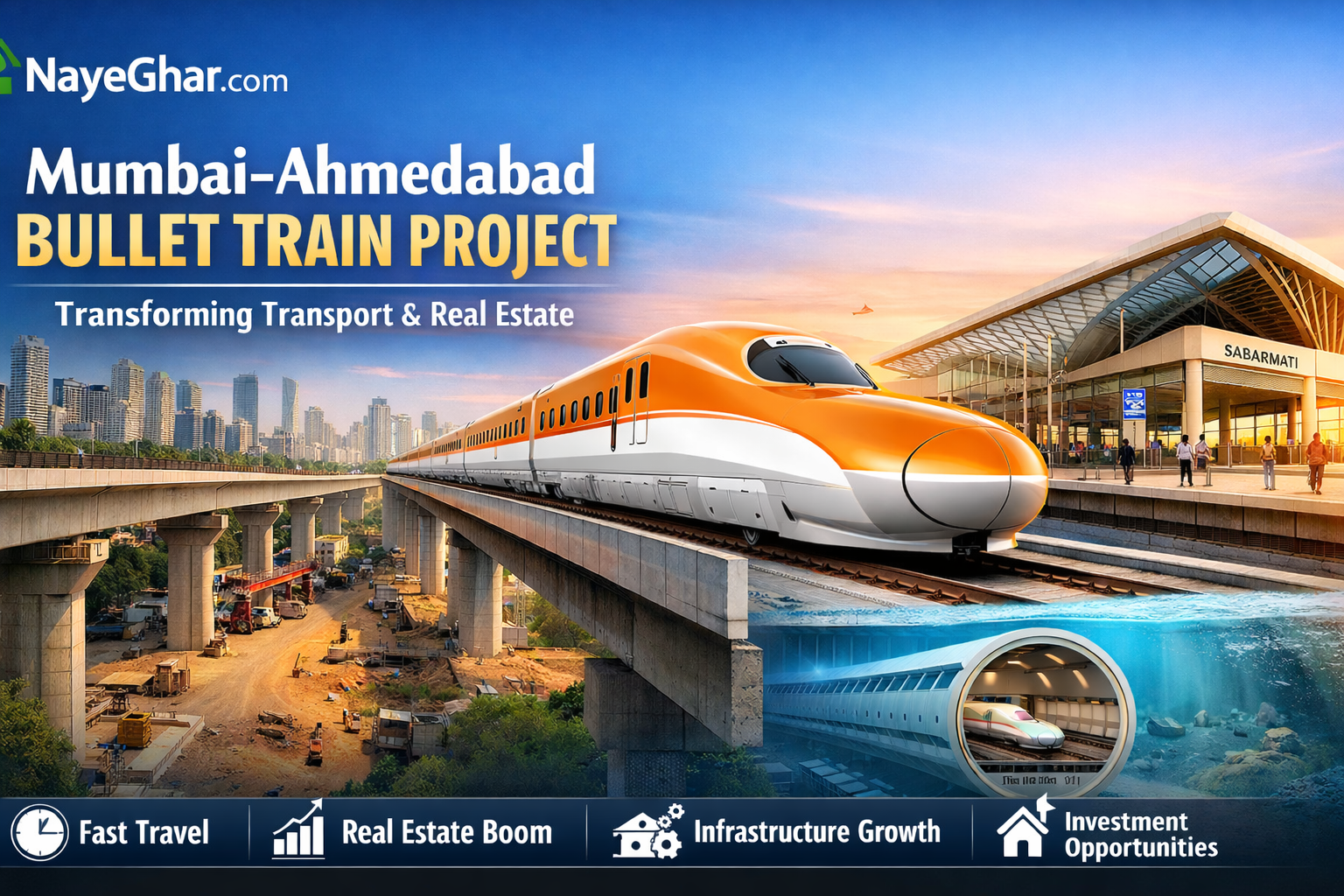
India is entering a new era of modern transportation with the Mumbai–Ahmedabad High-Speed Rail Corridor, popularly known as the Bullet Train Project. This ambitious project will introduce Japan’s world-renowned Shinkansen technology to India and significantly reduce travel time between Mumbai and Ahmedabad.
The bullet train corridor is not just a transportation upgrade; it represents a massive shift in India’s infrastructure landscape. The project is expected to boost economic growth, improve connectivity, and reshape the real estate markets in several cities along the corridor.
For property buyers, investors, and real estate professionals, this project presents enormous opportunities. Areas like Virar, Boisar, Surat, and Vapi are already gaining attention due to their proximity to proposed bullet train stations.
In this blog, we will explore every aspect of the Mumbai–Ahmedabad Bullet Train project including its route, stations, technology, construction progress, economic impact, and its potential influence on the real estate sector.
Overview of the Mumbai–Ahmedabad High-Speed Rail Corridor
The Mumbai–Ahmedabad High-Speed Rail (MAHSR) corridor is India’s first bullet train project. It aims to connect the financial capital Mumbai with the commercial hub Ahmedabad through a high-speed rail network.
Key Project Highlights
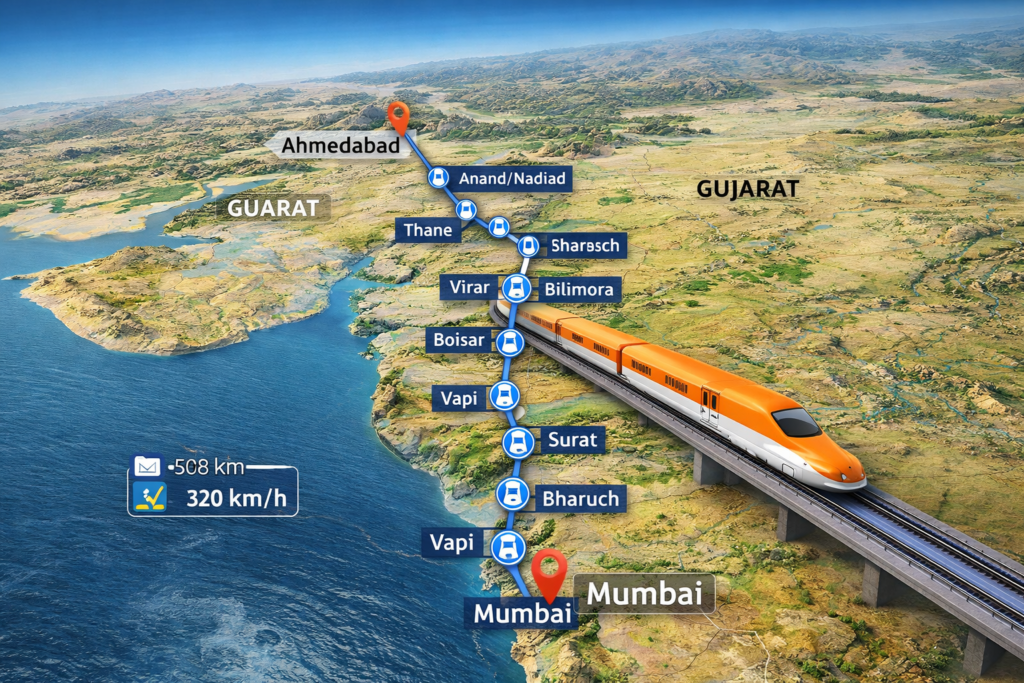
- Total Distance: 508 km
- Maximum Speed: 320 km/h
- Estimated Travel Time: Around 2 to 2.5 hours
- Total Project Cost: ₹1.08 lakh crore
- Technology Partner: Japan
- Operating Agency: National High Speed Rail Corporation Limited (NHSRCL)
The project is being funded largely through a low-interest loan from Japan, which covers approximately 80% of the project cost.
This corridor will dramatically reduce travel time compared to road or conventional trains, which currently take around 6–7 hours.
Route and Major Cities on the Bullet Train Corridor
The bullet train corridor will pass through Maharashtra and Gujarat, connecting several major cities and industrial hubs.
Cities Covered
The major cities along the route include:
- Mumbai
- Thane
- Virar
- Boisar
- Vapi
- Bilimora
- Surat
- Bharuch
- Vadodara
- Anand
- Ahmedabad
- Sabarmati
These locations are strategically selected based on population density, industrial importance, and economic activity.
Cities like Surat and Vadodara are already major economic centers, while places such as Boisar and Vapi are rapidly growing industrial hubs.
With the bullet train corridor, these cities will become even more connected, attracting businesses, tourism, and real estate investment.
Proposed Bullet Train Stations
The Mumbai–Ahmedabad High-Speed Rail Corridor will include 12 modern stations, each designed with world-class facilities.
List of Stations
- Mumbai (Bandra Kurla Complex – BKC)
- Thane
- Virar
- Boisar
- Vapi
- Bilimora
- Surat
- Bharuch
- Vadodara
- Anand / Nadiad
- Ahmedabad
- Sabarmati
Each station will include modern passenger amenities such as:
- High-speed escalators and elevators
- Smart ticketing systems
- Retail and commercial areas
- Multi-level parking facilities
- Integrated metro and transport connectivity
The BKC station in Mumbai will be an underground station built with advanced engineering due to the dense urban environment.
Technology Behind India’s Bullet Train
The Mumbai–Ahmedabad corridor will use Japan’s Shinkansen high-speed rail technology, which is known worldwide for safety, punctuality, and efficiency.
Key Technology Features
1. High-Speed Operation
The bullet train will operate at speeds up to 320 km/h, making it one of the fastest transportation systems in India.
2. Advanced Safety Systems
The Shinkansen technology includes automatic train control systems that prevent collisions and derailments.
3. Earthquake Detection System
Japan’s bullet trains are famous for their earthquake safety systems, which automatically stop trains if seismic activity is detected.
4. Dedicated Track
Unlike conventional railways, the bullet train will run on dedicated tracks, ensuring uninterrupted high-speed travel.
India’s First Undersea Rail Tunnel
One of the most remarkable engineering features of this project is the 21 km long tunnel between Mumbai and Thane.
A part of this tunnel will pass under the sea, making it India’s first underwater rail tunnel.
Tunnel Details
- Total Tunnel Length: 21 km
- Undersea Section: Approximately 7 km
- Location: Between BKC and Thane
This tunnel is being constructed using advanced Tunnel Boring Machines (TBM).
Construction Progress and Timeline
The construction of the Mumbai–Ahmedabad bullet train project is currently progressing rapidly, particularly in Gujarat.
Key Construction Updates
- Hundreds of viaduct pillars have already been completed
- Multiple river bridges are under construction
- Station construction has started in several cities
- Land acquisition is mostly completed
Expected Timeline
- Gujarat section operations: Expected around 2026–2027
- Full corridor completion: Around 2030
Economic Impact of the Bullet Train Project
The bullet train corridor will have a massive economic impact on both Maharashtra and Gujarat.
Key Economic Benefits
1. Faster Business Travel
Business travelers will be able to travel between Mumbai and Ahmedabad within 2 hours, improving corporate efficiency.
2. Industrial Growth
Industrial regions like Vapi, Boisar, and Bharuch will become more attractive for manufacturing and logistics companies.
3. Tourism Boost
Tourism between Maharashtra and Gujarat will grow significantly due to easier travel.
4. Job Creation
Thousands of jobs are being created in construction, engineering, and operations.
Impact on Real Estate Market
Infrastructure projects often drive real estate growth, and the bullet train project is no exception.
Cities near bullet train stations are expected to see significant property price appreciation.
Real Estate Hotspots
Some of the emerging real estate hotspots include:
- Virar
- Boisar
- Vapi
- Surat
- Vadodara
These areas offer relatively affordable property prices compared to Mumbai.
As connectivity improves, these locations will attract:
- Residential housing projects
- Commercial offices
- Industrial investments
Real Estate Opportunities for Investors
Investors looking for long-term returns should closely monitor locations near bullet train stations.
Why Investors Should Pay Attention
1. Infrastructure Development
New roads, metro connectivity, and commercial infrastructure often follow major transport projects.
2. Increased Demand
Improved connectivity increases demand for housing and commercial spaces.
3. Early Investment Advantage
Buying property before the project completion can yield higher returns.
Bullet Train vs Current Transport Options
Currently, travelers between Mumbai and Ahmedabad use several transport options:
Road Travel
- Time: 7–9 hours
- Traffic congestion is common
Conventional Train
- Time: 6–7 hours
Flight
- Flight time: 1 hour
- Total travel time including airport procedures: 3–4 hours
Bullet Train
- Travel time: 2–2.5 hours
- City center to city center connectivity
This makes the bullet train an attractive option for frequent travelers.
Environmental Benefits
The bullet train is also expected to have positive environmental impacts.
Key Environmental Advantages
- Lower carbon emissions compared to air travel
- Energy-efficient electric trains
- Reduced highway congestion
High-speed rail systems are considered one of the most sustainable transportation options.
Challenges Faced by the Project
Despite its benefits, the bullet train project has faced several challenges.
Major Challenges
1. Land Acquisition
Acquiring land in densely populated regions has been complex.
2. High Cost
The project cost of ₹1.08 lakh crore has been debated.
3. Construction Complexity
Building tunnels and elevated tracks requires advanced engineering.
However, the government and project authorities continue to work towards overcoming these challenges.
Future of High-Speed Rail in India
The Mumbai–Ahmedabad corridor is just the beginning.
India is planning several future high-speed rail corridors such as:
- Delhi – Varanasi
- Delhi – Ahmedabad
- Mumbai – Nagpur
- Chennai – Bengaluru – Mysuru
If successful, India could develop one of the largest high-speed rail networks in the world.
Why This Project Matters for India
The Mumbai–Ahmedabad bullet train represents more than just fast travel.
It symbolizes:
- India’s technological advancement
- Improved infrastructure
- Faster economic growth
- Global competitiveness
Countries like Japan, China, and France have already demonstrated the transformative power of high-speed rail networks.
India is now taking a significant step in that direction.
Conclusion
The Mumbai–Ahmedabad Bullet Train Project is one of the most transformative infrastructure initiatives in India’s history.
By connecting two major economic centers with high-speed rail, the project will reshape transportation, boost economic development, and open new real estate opportunities.
For property investors, businesses, and urban planners, the cities along the corridor will become key growth centers in the coming years.
As construction progresses and the project nears completion, the bullet train will not only revolutionize travel but also redefine regional development across Maharashtra and Gujarat.