 by Nayeghar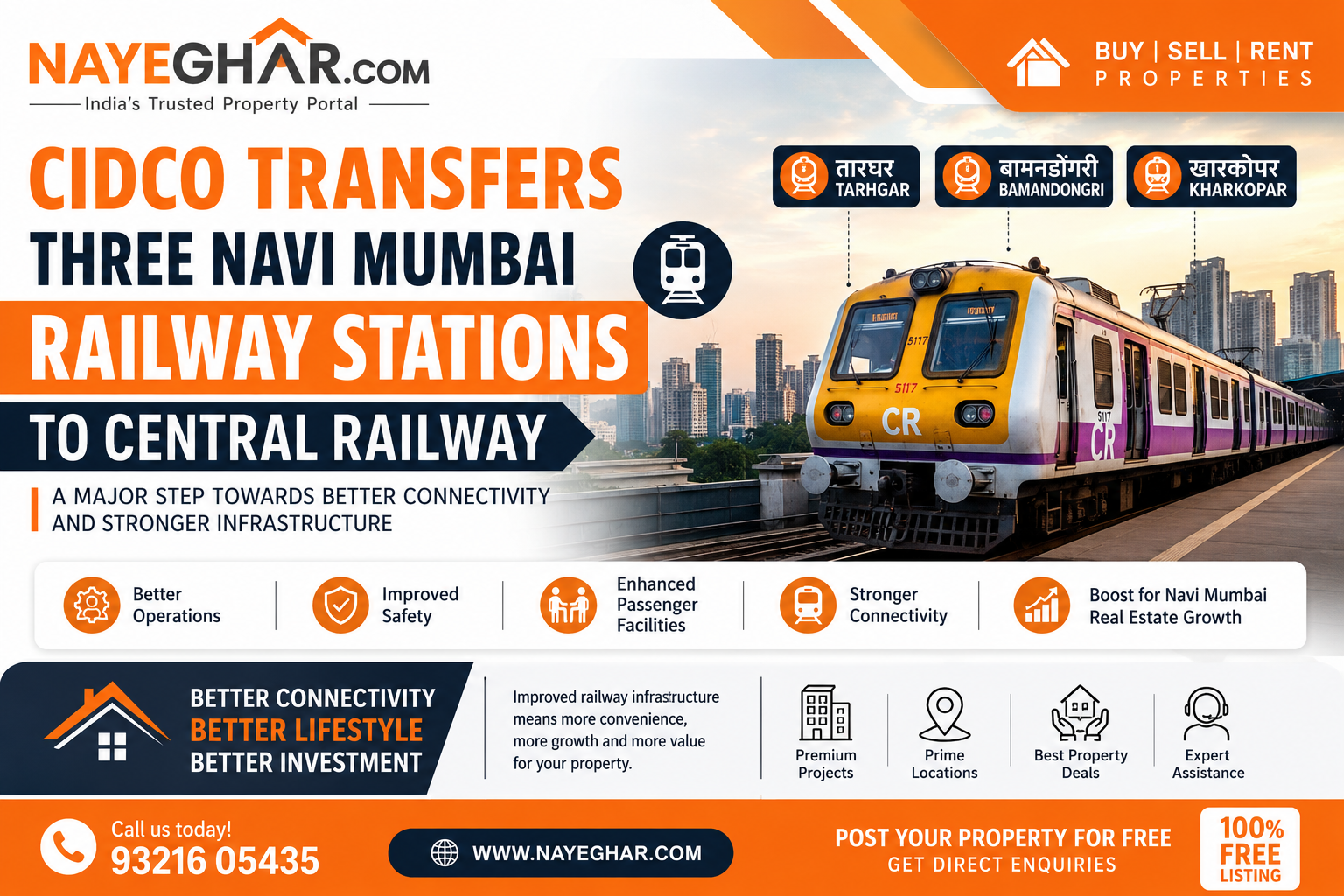
Introduction
Navi Mumbai has taken another significant step toward becoming one of India’s most well-planned and efficiently connected cities. In a major infrastructure development, the City and Industrial Development Corporation (CIDCO) has officially transferred Targhar Railway Station, Bamandongri Railway Station, and Kharkopar Railway Station, along with their associated railway infrastructure, to Central Railway.
This landmark transfer is expected to improve railway operations, strengthen passenger services, enhance maintenance standards, and accelerate the overall development of Navi Mumbai. The move also has important implications for the city’s growing real estate market, especially in rapidly developing areas like Ulwe, Kharkopar, Targhar, and Bamandongri.
What Is the Railway Station Transfer About?
CIDCO has played a crucial role in developing Navi Mumbai’s railway infrastructure over the past several years. As part of the next phase of infrastructure management, the corporation has officially handed over three key railway stations and all related operational assets to Central Railway.
The handover ceremony was conducted in the presence of Member of Parliament Naresh Mhaske, senior officials from CIDCO, and representatives of Central Railway.
With this transfer completed, Central Railway becomes responsible for the complete operation and management of these stations.
Railway Stations Included in the Transfer
The stations transferred to Central Railway include:
- Targhar Railway Station
- Bamandongri Railway Station
- Kharkopar Railway Station
These stations form an important part of Navi Mumbai’s suburban railway network and serve thousands of daily commuters traveling between Navi Mumbai, Mumbai, and nearby regions.
Infrastructure Handed Over to Central Railway
The transfer is much more than just railway station buildings.
CIDCO has handed over several critical railway assets, including:
- Station buildings
- Passenger waiting areas
- Station forecourts
- Commuter parking facilities
- Electrical substations
- Power supply systems
- Telecommunication infrastructure
- Signalling support systems
- Railway operational equipment
- Various passenger service facilities
This comprehensive transfer allows Central Railway to independently operate, maintain, and upgrade the stations whenever required.
Responsibilities Now Shift to Central Railway
Following the handover, Central Railway will now manage:
- Daily railway operations
- Station maintenance
- Passenger safety
- Cleanliness and sanitation
- Electrical maintenance
- Platform management
- Security arrangements
- Infrastructure upgrades
- Customer service improvements
This unified management system is expected to improve operational efficiency significantly.
Statements from CIDCO Officials
During the handover ceremony, Ashwin Mudgal, Vice Chairman and Managing Director of CIDCO, stated that CIDCO has played an important role in developing Navi Mumbai’s railway infrastructure from the beginning.
He described this transfer as a milestone that will improve railway administration while providing better services to commuters.
Senior CIDCO officials, including Joint Managing Director Dr. Raja Dayanidhi, also attended the event along with officials from Central Railway.
Benefits for Daily Commuters
Thousands of passengers use these stations every day.
The transfer is expected to provide several advantages, including:
Better Station Maintenance
Since Central Railway now directly controls the stations, maintenance activities can be carried out more efficiently.
Faster Repairs
Electrical systems, signalling equipment, platforms, escalators, lighting, and passenger facilities can now be repaired without administrative delays.
Improved Passenger Safety
Central Railway will oversee station security, surveillance systems, emergency response, and safety measures.
Cleaner Railway Stations
Passengers can expect improved housekeeping, cleaner platforms, and better public amenities.
Better Passenger Services
Facilities such as ticket counters, digital displays, announcements, waiting areas, and customer support are expected to become more efficient.
Impact on Navi Mumbai Infrastructure
This transfer represents much more than an administrative change.
It integrates Navi Mumbai’s railway infrastructure more closely with Central Railway’s overall suburban rail network.
This allows:
- Better coordination
- Faster decision-making
- Improved operational planning
- Standardized railway management
- Easier future expansion
The move supports Navi Mumbai’s long-term vision of becoming a world-class urban center.
Real Estate Impact
Improved transportation infrastructure almost always influences property values.
Areas expected to benefit include:
- Ulwe
- Kharkopar
- Targhar
- Bamandongri
- Dronagiri
- Pushpak Nagar
These localities have already experienced rapid residential growth due to infrastructure projects such as:
- Navi Mumbai International Airport
- Atal Setu (Mumbai Trans Harbour Link)
- Metro connectivity
- Coastal road developments
- Expanded railway network
With Central Railway taking over station management, buyer confidence may increase further.
Why This Matters for Homebuyers
Homebuyers generally prefer locations with reliable public transportation.
Improved railway services offer several advantages:
- Easier daily commuting
- Reduced travel time
- Better connectivity with Mumbai
- Higher quality of life
- Increased resale value
- Better rental demand
For first-time buyers, these improvements make Navi Mumbai an even more attractive destination.
Benefits for Property Investors
Infrastructure development often leads to long-term appreciation in property prices.
Investors may benefit from:
- Rising property demand
- Better rental income opportunities
- Increased commercial development
- Improved connectivity
- Higher return on investment
- Growing residential demand
Areas surrounding railway stations generally witness faster urban development.
Future Development Opportunities
Now that Central Railway has operational control, future improvements could include:
- Platform modernization
- Smart ticketing systems
- Enhanced digital passenger information
- Improved accessibility
- Better parking facilities
- Additional passenger amenities
- Advanced security systems
- Sustainable station development
These upgrades would further improve the commuting experience.
What This Means for Navi Mumbai’s Growth
Navi Mumbai is witnessing several transformational infrastructure projects.
These include:
- Navi Mumbai International Airport
- Metro Rail Expansion
- Mumbai Trans Harbour Link
- Coastal Road Connectivity
- Smart City Development
- Industrial Growth
- Commercial Expansion
The railway station transfer complements these initiatives and strengthens the city’s transportation ecosystem.
Conclusion
CIDCO’s decision to transfer Targhar, Bamandongri, and Kharkopar Railway Stations to Central Railway marks a significant milestone in Navi Mumbai’s infrastructure journey.
The transfer is expected to improve station management, passenger services, maintenance efficiency, and operational performance. It also reinforces Navi Mumbai’s position as one of India’s fastest-growing urban centers.
For commuters, this means a smoother travel experience. For homebuyers and investors, it signals stronger infrastructure support and long-term growth potential. As Navi Mumbai continues to develop through major transportation and urban projects, this railway transfer represents another important step toward creating a more connected, efficient, and future-ready city.
Frequently Asked Questions (FAQs)
1. Which railway stations were transferred by CIDCO?
Targhar Railway Station, Bamandongri Railway Station, and Kharkopar Railway Station.
2. Who will manage these stations now?
Central Railway will handle operations, maintenance, safety, and passenger services.
3. Why is this transfer important?
It improves operational efficiency, passenger facilities, and long-term railway management.
4. Will property prices increase near these stations?
Improved connectivity often supports higher demand and long-term property appreciation, although prices depend on multiple market factors.
5. Which areas may benefit the most?
Ulwe, Kharkopar, Targhar, Bamandongri, Pushpak Nagar, and nearby parts of Navi Mumbai.